Thursday, August 25, 2011

Windows 8: What We Know So Far

Michael MuchmoreBy Michael Muchmore


Microsoft has started spilling about what we can expect in the next major version of Windows, and some of the changes are huge.

For over a year, Windows 8, the next big Microsoft desktop OS, was shrouded in mystery, with rumors and purported "leaks" popping up here and there, later to be soundly debunked. One supposed "Windows 8" build was a hacker's mildly tweaked Windows 7 Enterprise Edition, with a few interface changes and a laughable message on the desktop "Shhhh, let's not leak our hard work!"
All indicators point to Windows 8 being a huge change from its predecessors. While Windows 7 was a tightening, speeding up, and interface-improving of Windows Vista, Windows 8 promises to radically change the operating system—even beyond anything the leaks and rumors hinted at.
Microsoft took the world by storm when it demonstrated an early build of the nascent operatingsystem simultaneously at the Computex and D9 conferences this past spring. At these events, Microsoft gave us glimpses of Windows 8, demonstrating tablets running the emerging OS. They've even posted a video showing how the team came up with design choices and highlighting new features. There the public was treated to a completely different looking Windows interface, one based loosely on that of the company's mobile operating system, Windows Phone 7.
More recently, Microsoft's president of the Windows and Windows Live Division, Steven Sinofsky, recently launched the Building Windows 8 blog, where details will be shared and feedback will be collected. The blog is written by Microsoft engineers working on particular features of the OS and intended for an engineer audience. But it also gives the public some insight into what's cooking at the Redmond operating system factory.
In the first post on that blog, Sinofsky makes the bold assertion that Windows 8 will represent the biggest rethinking of the PC operating system since Windows 95. That's quite a statement, considering big-time releases like XP, Vista, and Windows 7 have intervened. Windows 95 was the first version to truly break the bonds of DOS, and Windows 8 also promises to move the PC in a drastically new direction. It's Microsoft's response to the "post-PC" world of tablets epitomized by Apple's iPad.
So we've gotten a brief look at W8 at the spring conferences, and more details are starting to dribble out from the Windows 8 blog, but we can expect to get a much fuller look at Windows 8 soon. Microsoft will host a new developer conference on September 13 to 16 in Anaheim, California. BUILD is the show at which the company has promised more details than we've seen to this point. The tag line for the show is "In 1995, Windows changed the PC. BUILD will show you that Windows 8 changes everything." PCMag will be there, keeping you abreast of any and all new light shed on the new OS. But in the meantime, in case you haven't been following Windows 8's birthing process, the pictorial journey here will get you caught up to speed.

Wednesday, August 24, 2011

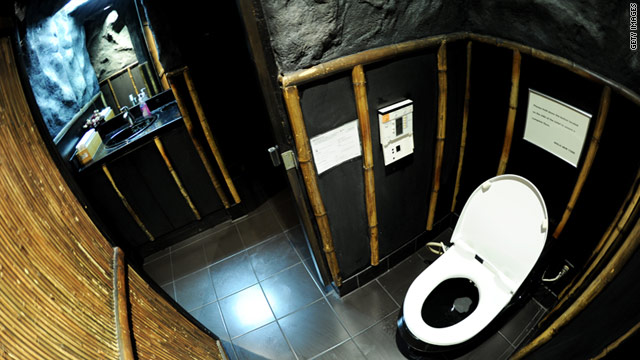
Tablet computers: Fun in the bathroom?


(CNN) -- If you're ashamed to admit you can't resist checking e-mail, catching up on your Web comics or flinging a few "Angry Birds" when nature calls, take heart. You're not alone.
More than one out of three respondents to a recent, unscientific survey admitted to using their tablet computers while in the bathroom.
The survey by office-supply seller Staples Inc. asked 200 tablet-using professionals about their preferences and habits.
There were several interesting findings. Among them, that the simple ability to store and carry around a tablet easily was a top selling point for more than 90% of people who bought them.
But the factoid that seemed to catch everyone's attention Tuesday was that more than one-in-three respondents -- 35% -- fessed up to using their iPad, Motorola Xoom, Samsung Galaxy or other tablets while in the bathroom.
Staples filed that fact alongside other indicators that, for tablet owners, mobility is king. Seventy-eight percent of respondents said they'd used their tablets in bed and 30% said they'd used them in restaurants.
"Being able to tuck a tablet into a portfolio or small bag was more important than the ability to video conference, the device's operating system or easy access to office e-mail and VPN," the company said in a report on the survey released Tuesday.
The survey was designed, at least in part, to gain insight into how professionals are using tablet computers, which are largely marketed as gaming, reading and recreational gadgets.
The answer? At least 80% of respondents said they "enjoy a better work-life balance" because of their iPad or other tablet. Sixty percent said they get more work done because of their tablet and more than 40% said staying in touch with co-workers and clients was a main reason for buying one.
Which is all well and good. But who could resist pointing out the glimpse into the rarely acknowledged truth that a trip to the water closet has long been an excuse to catch up on reading or other activities. (This doesn't mean we're letting you off the hook,Bathroom Stall Texter/Talker).
And, that being the case, the odds were low that everybody was going to avoid potty humor.
We're warmheartedly calling out Brad Reed of IT site Network World for this groaner of an intro:
"With the market flush with hot-selling tablet computers, it shouldn't bowl anyone over to learn that many users are taking the plunge and bringing their devices to the bathroom."
So, who's ready to fess up? Tablets in the bathroom -- guilty as charged or disgusted on principle?

Tuesday, August 23, 2011

Web surfing at work is 'restorative,' researchers say


Vivien K.G. Lim and Don J.Q. Chen aren't advocating you surf the Web at work; they just contend that doing so may actually make you more productive in the long run.
Lim, an associate business professor at National University of Singapore, and graduate student Chen presented that finding from their study, "Impact of Cyberloafing on Psychological Engagement," at the Academy of Management's annual meeting last week in San Antonio.
Just about everyone does check the Web at work for personal stuff, whether it's quick check of Facebook, or doing some fast online shopping, be it from a smartphone or work computer. (Whipping out your iPad at work might be too obvious, unless you're using one for work.)
Web surfing at work "serves an important restorative function," the researchers said, and employers should:
... recognize that blanket policies that prohibit all forms of personal Web usage are ineffective, and excessive monitoring is likely to be counterproductive. Instead, limited amount of personal Web use should be allowed, since it has salubrious impact on employees' productivity.
Most employers don't agree, and almost all major companies now have Web monitoring software in place to make sure workers aren't spending hours at porn, gambling or shopping sites — which some employees do, given the chance.
One thing that should be discouraged at work: Checking personal email accounts. Those seem to put employees in a "double bind," Lim and Chen said.
"First, the compelling need to reply to a received email impedes employees' psychological engagement by affecting their ability to concentrate. Second, when employees reply to these emails, they experience resource depletion, negative affect and workflow disruption."
— Via AllThingsD
 Computer, Laptop and Network Repair Call Geek ToGo at 1-888-320-5012

Monday, August 22, 2011

How to find a deeply discounted HP TouchPad


(Mashable-- The discontinued HP TouchPad continues its liquidation at fire sale prices, and the frantic search for the defunct tablet at that elusive $99.99 price was one of the trending topics on Twitter yesterday.
Use this link to search Twitter for the latest info, or use the Twitter hashtag #HPTouchpad to get pricing and locations where the TouchPad might be available.
Another good place to keep tabs on the HP TouchPad isslickdeals.net, where a Wiki Community Board shows you where you might be able to find a bargain. It's a quickly changing situation, so you might want to check back often to see if there are any changes.
Alas, according to slickdeals.net, many of the possibilities have already been exploited, with the following stores shown as sold out:
* Office Max [officemax.com] (Sold Out)
* HP Home & Office -- 16 GB [hp.com] (Sold Out)
* HP Home & Office -- 32 GB (Sold Out)
* PC Richard (Sold Out)
* Target (Sold Out)
* Sam's Club (Sold Out)
* Office Depot (Sold Out) (apply 942099541 for free $15 giftcard for lunch. Good for subway/panera bread/burger king)
* Walmart (Sold Out for online shipping, choose your local store to see if it's available for instore pickup)
* MicroCenter -- 16 GB(Sold Out) -- Orders which were confirmed by email are being followed by cancellation emails, even in cases of ordering only 1.
* MicroCenter -- 32 GB(Sold Out)
* Fry's (Sold Out)
* J&R (Sold Out)
Canada:
* Best Buy Canada (Sold Out)
* FutureShop (owned by BBY) (Sold Out)
You'll find a lot more info and tips at slickdeals.net. Another tip: Have a live chat with other bargain hunters about availabilities and pricing of the TouchPad at TinyChat.com.
Yet another tip: Best Buy won't be selling the TouchPad in the U.S., but is offering a full refund for those who bought the TouchPad on a 60-day policy.
Early adopters who bought the HP TouchPad at near-retail prices will be happy to know that according to WebOS Roundup, HP has agreed to refund the difference between what they paid and these ultra-low fire-sale prices.
Let us know in the comments if you've had any luck finding available TouchPads at deep discounts.
© 2010 MASHABLE.com. All rights reserved.

Friday, August 19, 2011

More Than 200,000 BitTorrent Users Sued


Since the beginning of 2010, more than 200,000 people have been sued for allegedly illegally downloading copyrighted files. TorrentFreak reports that a huge number of these people are BitTorrent users that have been targeted for allegedly pirating the 2009 Academy Award winning film The Hurt Locker.
According to TorrentFreak, U.S. courts have been “overloaded” with new cases, and the number of people currently targeted for piracy currently stands at 201,828. TorrentFreak pointed to a massive spreadsheet on Google Docs that breaks down who has been sued since the beginning of last year. The vast majority of those defendants are accused of illegally copping The Hurt Locker via BitTorrent, and 1,237 are accused of downloading it on the eD2K network. The copyright holders are trying to collect the personal details of the people accused of sharing the content online so that it can then force them to pay up.
However most of the cases aren’t going to trial; defendants are usually offered a settlement for anywhere from a few hundred to several thousand dollars, TorrentFreak says.
Around 60,000 cases have already been settled, but TorrentFreak says 145,417 defendants are still "at risk."
The largest portion of this group comprises those accused of downloading The Hurt Locker. As of May, Voltage Pictures, the makers of the film, had sued 24,583 BitTorrent users, in what could be the biggest file-sharing lawsuit of all time. That is, if any of the cases ever make it to trial. However, at this point none of the cases have made it that far, and TorrentFreak says the first round of settlement offers have been sent out to the alleged copyright infringers.
For more from Leslie, follow her on Twitter @LesHorn.
For the top stories in tech, follow us on Twitter at @PCMag.

Thursday, August 18, 2011

These 5 streaming music services lead the pack


These 5 streaming music services lead the pack


msnbc.com - 7/27/2011
Alan Henry
 
Whether you prefer free streaming at your computer, paid streaming on the go or the ability to host your own music in the cloud, there are more streaming music services coming online now than ever before. Here's a look at five of the most popular ones.
We asked readers which streaming music services you preferred, now that there are so many new contenders and old names that offer new features. You responded, and the votes are in. Now we're back to highlight your top five.
 
Spotify
 
Spotify has long been one of the most popular streaming music services across the pond, and the service's launch in the U.S. last week certainly earned it some fans. Spotify has a music library at least 15 million songs large, free and tiered premium plans ($4.99/month for Unlimited and $9.99/month for Premium) and support for most major desktop and mobile operating systems. Plus its wide userbase, partnership with Facebook and growing popularity mean you'll likely be able to find what you want to hear. Got your invite? Get started with our essential Spotify tools.
 
 
Grooveshark
 
Grooveshark is another of our favorite streaming services. Completely free, unless you want mobile access, Grooveshark boasts a huge library of user-uploaded songs, mashups, remixes and more. The service makes it incredibly easy to hop over, type in a song you want to hear and click play to just hear it, no accounts, strings or payment plans attached. You'll have to pay for the desktop player (essentially an AIR version of the site) and the mobile app ($6/month for Plus removes ads, $9/month for Anywhere adds the mobile app) but if you have playlists and friends using Grooveshark, it may be worth it. The last time we asked, Grooveshark was your favorite streaming music service.
 
 
Pandora
 
Built on the Music Genome Project, Pandora was one of the first Internet-radio services, able to propose songs to you based on songs that you've previously enjoyed. Pandora is still one of the most popular music discovery services available. It's not music on-demand, as in you can't request a specific song and hear it, but it does an unparalleled job at introducing you to new bands, artists and songs you may like. The service is free, although ad-supported and with limited listening time and lower audio quality. Pay for Pandora One ($36/year) to remove ads, bump up the audio quality and get unlimited listening, as well as a desktop player.
 
 
While Google Music doesn't really offer streaming in the same way the other services do, you do get storage for 20,000 of your own songs and the ability to access them from any web-connected computer and your Android phone. Even though the service is still in beta, it's already one of the most popular cloud music services. When you sign up, Google gives you some songs to listen to, but you're expected to upload your own. Once you do, you have access to them anywhere you go. Google Music is completely free.
 
 
Rdio
 
Rdio is a social music service, and what you have to listen to is highly influenced by what your friends are listening to and enjoying. The service crashed on the scene last year to rave reviews for its broad music library, social features and shared albums and playlists, and mobile apps for just about every smartphone platform. You can look around for music, but Rdio does a great job of getting you interested in the things that your friends are listening to first, and then leading you from there. You can try Rdio for free for a week, but after that it's either $4.99 to use it on the web or $9.99 for web and mobile access, and the ability to download songs for offline play.
Now that you've seen the top five, it's time to vote for an all-out winner.
This week there was a three-way tie for No. 6, all worth noting as honorable mentions: MOG, another subscription-based music service that's well loved for its 11 million-song library, and impressive radio and music discovery features, tied with Microsoft's Zune Pass, which exceeds the media player that spawned it. Zune Pass has a massive music library, a beautiful desktop player and offers subscription and pay-per-download options. Subscribers get credits they can spend on songs to download and keep forever each month. Rhapsody also tied, sporting 12 million songs, mobile and desktop apps for streaming and downloading, and tiered subscription plans based on the features you need.